Our Diocese
History of the Diocese
Early mission years
The Anglican faith first came to the region in 1919 through the Church Missionary Society (CMS), which established its first mission station at the Church of the Good Samaritan, Nyangwa — the Mother Church of the Diocese. From there the Gospel spread among the Mbeere, Kamba, Embu and Kikuyu peoples, accompanied by schools, dispensaries and community work.
A local Church emerges
As the Anglican Church of Kenya developed its provincial structure, the lower, semi-arid regions of Embu County formed part of the larger ACK Diocese of Embu. The pastoral demands of this rapidly growing flock, together with the geographic and cultural distinctiveness of the Mbeere lowlands, made the case for a dedicated diocese.
The establishment of the Diocese of Mbeere
The ACK Diocese of Mbeere came into existence on 1st July 1997, created out of the former ACK Diocese of Embu. It is headquartered at the Cathedral of St. Peter's Mbeere, Siakago, covering the lower, semi-arid regions of Embu County, and is recognised as a Diocese of the Anglican Church of Kenya.
The Rt. Rev. Gideon G. Ireri was consecrated as the first Bishop of the Diocese on 26th October 1997 at the Church of the Good Samaritan, Nyangwa — the very place where the CMS Mission had begun in 1919. The historic consecration was witnessed by, among others, His Excellency the President of the Republic of Kenya, Daniel Toroitich Arap Moi.
Bishops of the Diocese
- Rt. Rev. Gideon G. Ireri — first Bishop of Mbeere, consecrated 26th October 1997. Founding shepherd who built the diocesan structures and parish network.
- Rt. Rev. Prof. Moses Masamba Nthukah — second and current Diocesan Bishop, consecrated and enthroned 12th October 2008.
- Rt. Rev. Dr. John Kimani Nthigah — Assistant Bishop, consecrated 12th May 2024, supporting the Diocesan Bishop in the pastoral leadership of the Diocese.
A diocese today
The Diocese of Mbeere today comprises 6 archdeaconries and 72 parishes, with hundreds of congregations and outstations reaching every community across Embu County. It remains part of the Anglican Church of Kenya, under the leadership of the Archbishop, The Most Rev. Dr. Jackson Ole Sapit, and continues to pursue a wholistic ministry of evangelism, education, health, and community development.
Background
Origins of the Church in Mbeere
The Anglican witness in what is today the Diocese of Mbeere began in the 1920s when missionaries of the Church Missionary Society (CMS) first penetrated the Mbeere and Embu regions of Kenya's Eastern Province. These early workers established mission stations, schools, and dispensaries that became the foundation of the Church's presence.
For decades the area was served within the Diocese of Mount Kenya, then the Diocese of Embu, as the Church progressively subdivided to reflect the growth of congregations and the need for closer pastoral oversight.
On 1 July 1997, the Diocese of Mbeere (formally also known as the Diocese of Embu) was formally inaugurated by the Anglican Church of Kenya, carved out of the Diocese of Embu, with St. Peter's Cathedral in Siakago as the seat of the new bishop.
Year of Establishment
Diocese formally inaugurated on 1 July 1997
First CMS Mission Work
Church Missionary Society establishes first stations in Mbeere
Key Events
Diocesan Timeline
CMS Mission Arrives in Mbeere
Church Missionary Society workers establish the first mission stations, schools, and medical dispensaries in the Mbeere and Embu area.
First Permanent Churches Built
Permanent stone church buildings are constructed at Siakago, Mayori, and Kanyuambora, providing centres for worship and community life.
Rapid Expansion of Congregations
A wave of church planting sees new congregations established across Mbeere North and South, supported by trained local evangelists and catechists.
Diocese of Embu Formed
The area becomes part of the newly formed Diocese of Embu, bringing it under dedicated diocesan oversight for the first time.
Preparations for Subdivision
The ACK House of Bishops approves the subdivision of the Diocese of Embu to create a new diocese centred on Siakago, to better serve the growing faithful.
Diocese of Mbeere Established
On 1 July 1997, the Diocese of Mbeere is officially inaugurated. Rt. Rev. Gideon Ireri is consecrated as the first Bishop and St. Peter's Cathedral, Siakago, is designated the diocesan seat.
First Diocesan Synod
The inaugural Diocesan Synod is held, establishing the governance structures and canonical framework for the new diocese.
Kithimu–Igambang'ombe Archdeaconry Created
A sixth archdeaconry is carved out to serve the growing communities in the Kithimu and Igambang'ombe areas of Mbeere North.
Second Bishop Consecrated
Rt. Rev. Prof. Moses Masamba Nthukah is consecrated as the second Bishop of Mbeere, ushering in a season of institutional growth and wholistic ministry.
Education Secretariat Established
A dedicated Education Secretariat is established, overseeing the diocese's network of sponsored primary and secondary schools.
Assistant Bishop Consecrated
Rt. Rev. Dr. John Kimani Nthigah is consecrated as Assistant Bishop on 12 May 2024, supporting the Diocesan Bishop in pastoral leadership across the 6 archdeaconries.
Episcopal Succession
Bishops of the Diocese
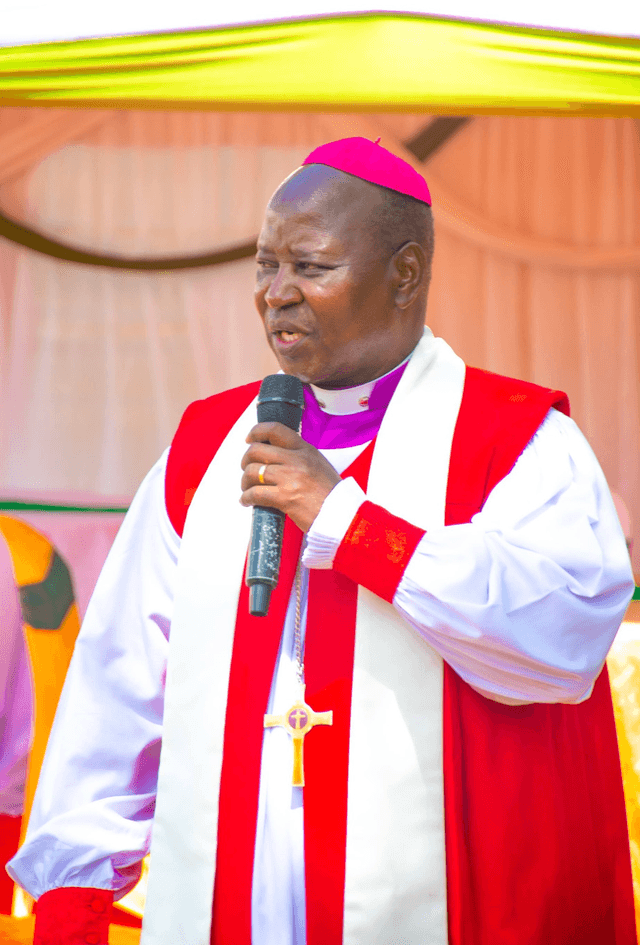
Rt. Rev. Gideon G. Ireri
First Bishop of the Diocese of Mbeere. Led the diocese through its formative years, establishing its administrative structures and overseeing significant parish growth.
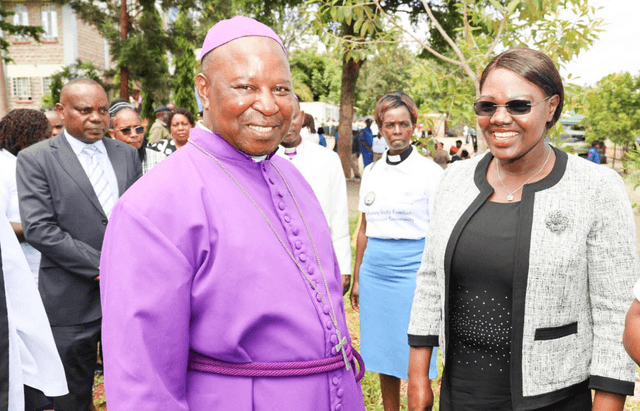
Rt. Rev. Prof. Moses Masamba Nthukah
Second and current Diocesan Bishop. Also serves as Dean of the Province of the Anglican Church of Kenya. Has led the Diocese with a commitment to wholistic transformation across 6 archdeaconries.
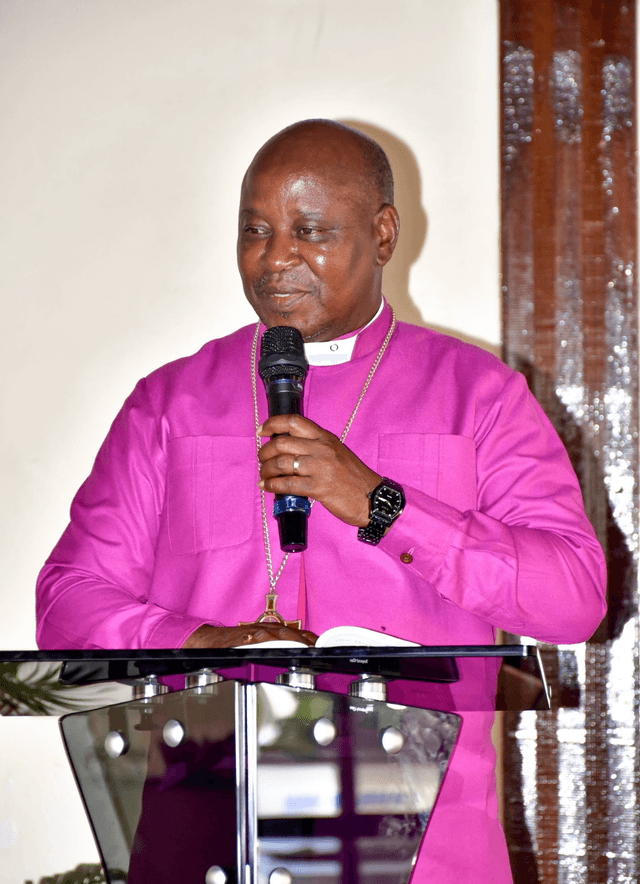
Rt. Rev. Dr. John Kimani Nthigah
Assistant Bishop. Consecrated 12 May 2024, supporting the Diocesan Bishop in pastoral leadership across the Diocese.
Diocese Today